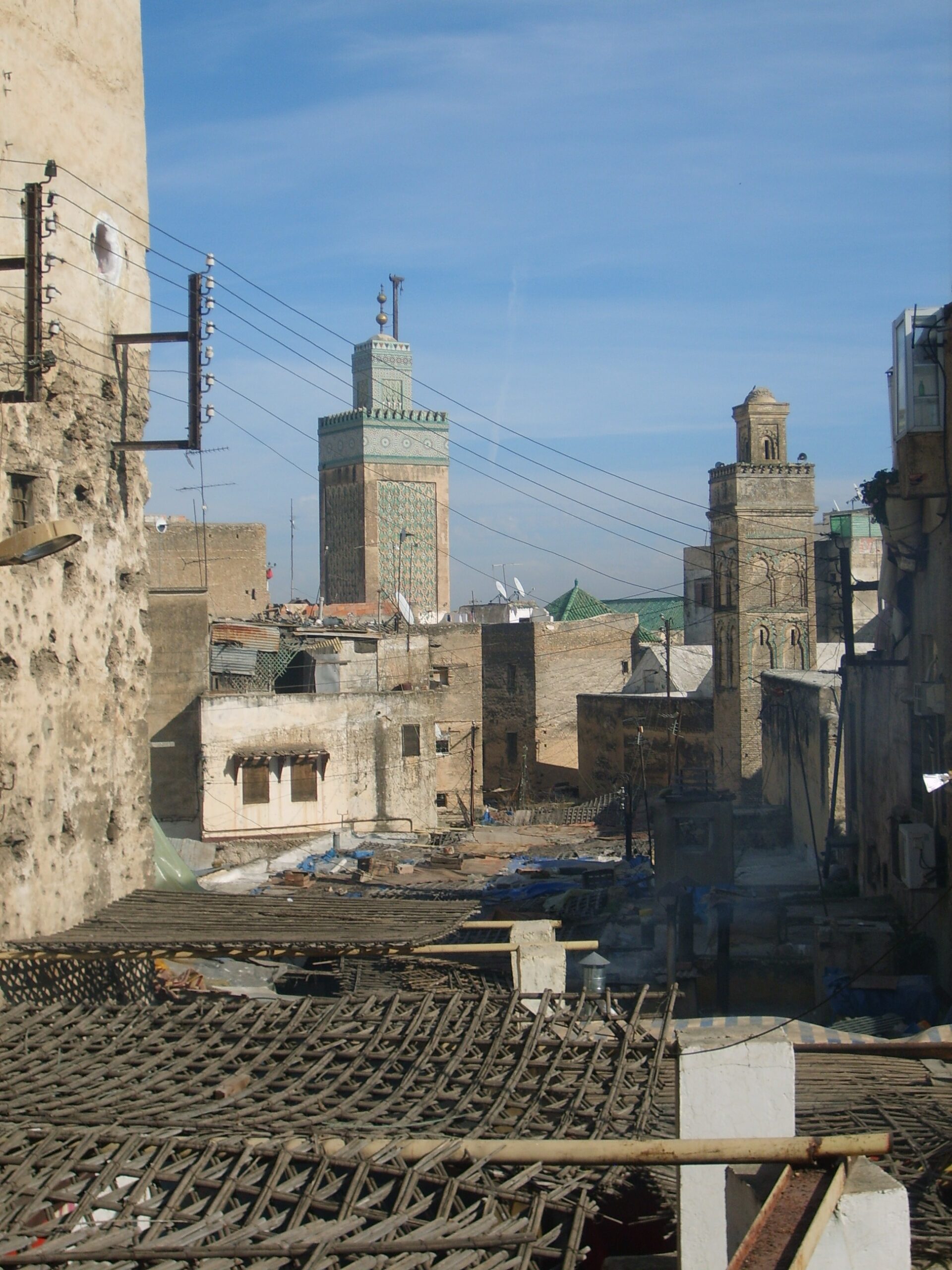
Walk into Fes el-Bali, the old walled heart of Fez, and the first thing you notice is what is missing: traffic. Donkeys, handcarts and pedestrians share lanes that were laid out more than a thousand years ago, and the medina remains one of the best-preserved historic cities in the Arab world.
A capital founded in the Idrisid era
According to Wikipedia’s account of the site, Fes el-Bali began as the capital of the Idrisid dynasty. Idris I started the town on the right bank of the Fez River in 789, and his son Idris II founded a second settlement on the opposite bank in 809. Later, during the Almohad period, Fez is described as having around 200,000 residents and, for a time, as one of the largest cities in the world.
The medina was inscribed on the UNESCO World Heritage List in 1981, together with the newer district of Fes Jdid.
Why it is called a car-free city
Fes el-Bali is described as a car-free urban area of roughly 300 hectares. Only one main road reaches it, from the south, allowing public transport and emergency vehicles to approach. Inside, the lanes are too narrow for vehicles, so goods still move on foot or by pack animal.
The medina is traditionally divided into two historic quarters: the Qarawiyyin quarter, with 12 neighbourhoods, and the Andalusian quarter, with six.
What to look for
- Al-Qarawiyyin: traditionally said to have been founded in 859 by Fatima al-Fihri, it is recognised by UNESCO and Guinness World Records as the oldest continuously operating university in the world, and is centred on a 9th-century mosque.
- Chouara tannery: one of the medina’s best-known landmarks, where leather is still worked in the traditional way.
- Craft streets: the lanes are grouped by trade, from metalwork to leather and, as we explained in our guide to zellige tilework, hand-cut mosaics.
Visitors are usually advised to hire a licensed local guide for a first visit, since the maze of lanes can be confusing. For planning a trip, see our season-by-season guide to visiting Morocco.
With more than twelve centuries of continuous life, Fes el-Bali is less a museum than a working neighbourhood, which is exactly why it continues to draw travellers and researchers alike.
Sources: Wikipedia, Fes el Bali; UNESCO World Heritage Centre, Medina of Fez

Leave a Reply