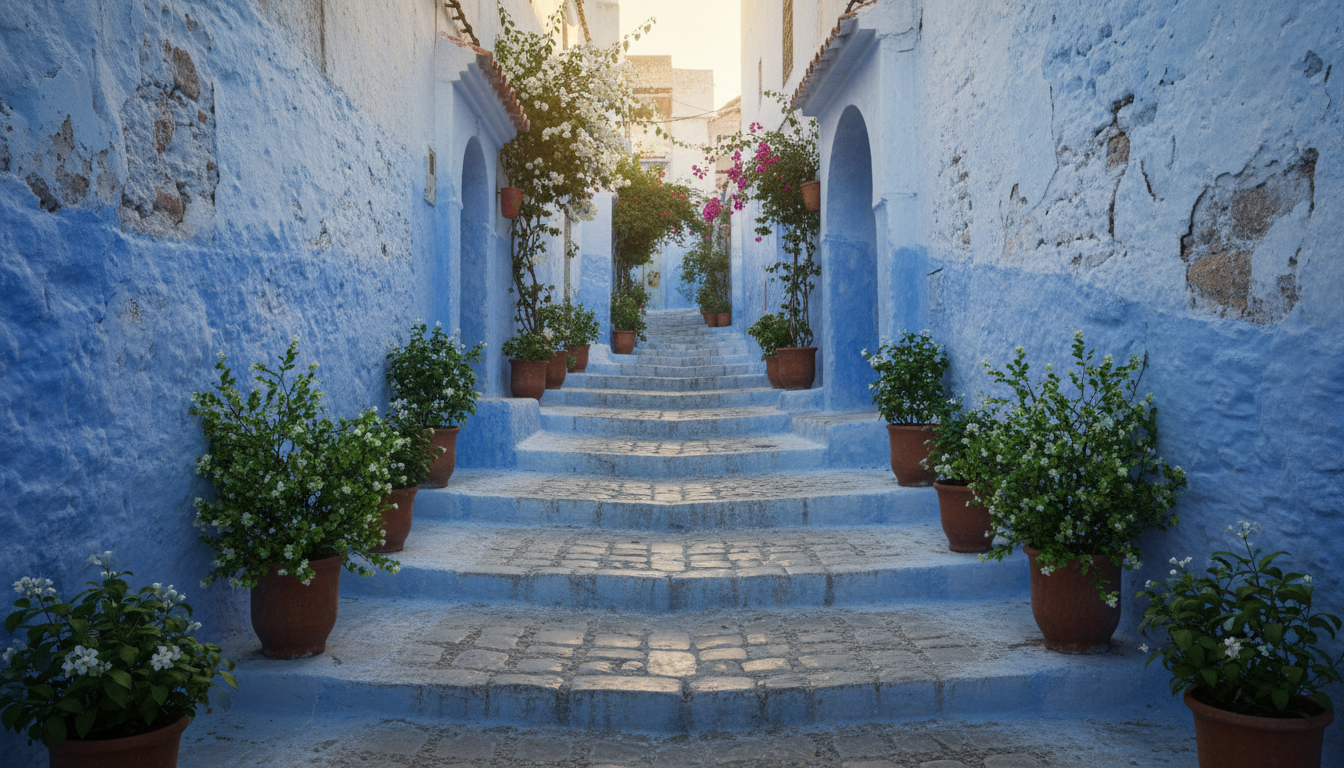
Few Moroccan towns photograph as well as Chefchaouen. Tucked into the Rif Mountains, its medina is washed in shades of blue that vary from street to street. Visitors often ask the same question: why is it blue? The honest answer is that nobody can prove it.
The origin of the blue
The most widely repeated account credits Jewish refugees who settled in the town in the 1930s. According to travel magazine AFAR, the colour is tied to a tradition of weaving blue thread into prayer shawls as a reminder of the sky. AFAR does not cite a source for that history, and On The Go Tours notes that none of the explanations has ever been proven.
Other theories include that blue paint repels mosquitoes, keeps houses cool, or echoes the sky and spring. What is clear is that the paint is maintained today: AFAR reports that the local government hands out paintbrushes each spring so residents can refresh the walls.
What to see
- The medina itself, best explored on foot without a fixed route.
- Plaza Uta el-Hammam, the central square beside the old kasbah, where cafés stay busy into the evening.
- Ras el-Maa, a spring and small waterfall at the edge of the old town.
- The Spanish Mosque, a hilltop building about 30 minutes’ walk from town, popular for sunset views.
- Hiking trails in the surrounding Rif Mountains.
When to go and how to get there
On The Go Tours recommends spring, from March to May, for mild temperatures of about 18 to 20°C, and describes autumn as warm and clear. AFAR suggests May to September and warns that Spanish holidaymakers crowd the town around Easter. Both sources advise staying overnight if possible, since early mornings are the quietest time before day visitors fill the lanes.
The town lies about two hours inland from Tangier, according to AFAR, with daily buses from cities including Tangier, Fes and Casablanca. Bring some cash, as many market stalls do not accept cards.
Whatever the true story behind the colour, Chefchaouen rewards slow wandering. For more planning help, see our season-by-season guide to visiting Morocco and our list of eight Moroccan dishes to try.
Sources: AFAR; On The Go Tours

Leave a Reply