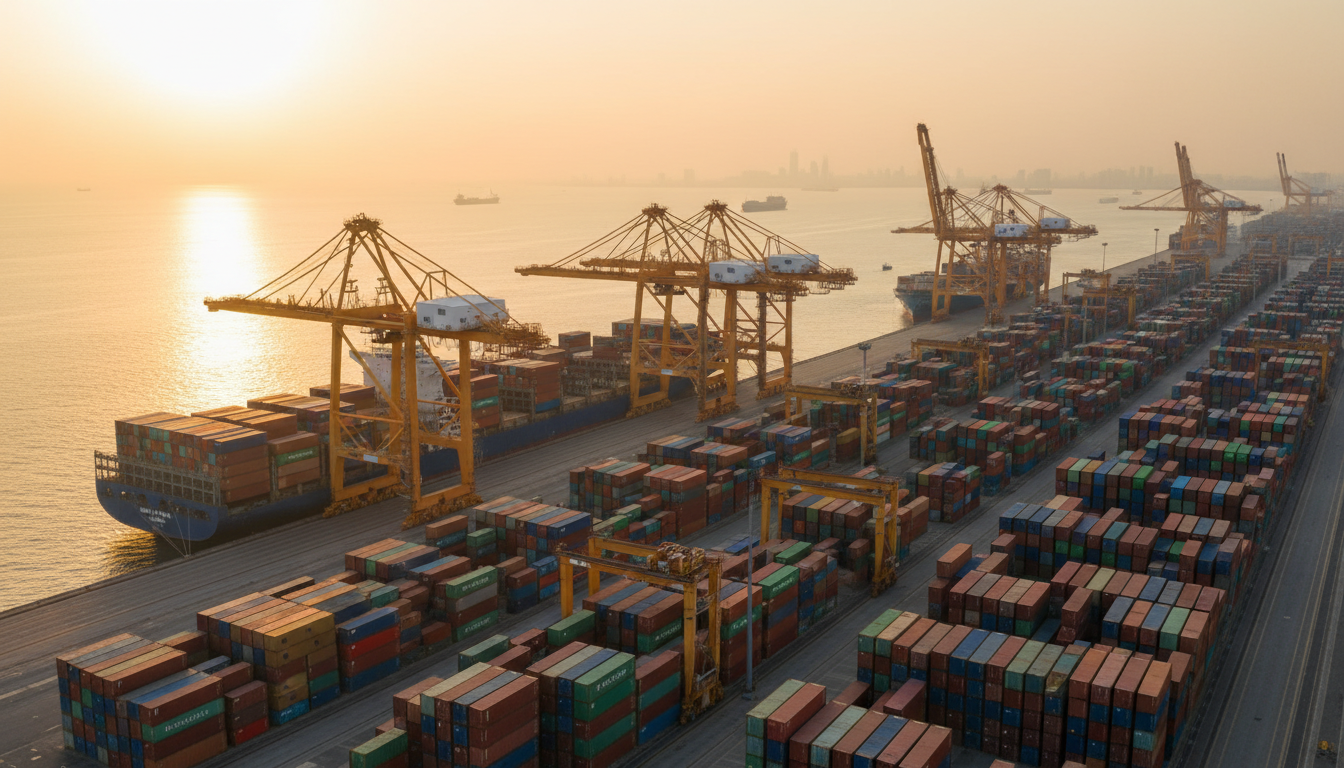
Morocco’s trade gap kept growing in the first eight months of 2026. Provisional figures from the Office des Changes, reported by Moroccan and international media, show the deficit reaching MAD 282.6 billion, up 25.4% from a year earlier.
Imports grow almost twice as fast as exports
Between January and August, imports climbed 15.8% to about MAD 617.5 billion, while exports rose 8.7% to roughly MAD 334.9 billion. As a result, the export-to-import coverage rate slipped to 54.2%, from 57.7% a year earlier, according to Bladi.net’s reading of the Office des Changes data.
What is driving the numbers
- Energy: energy and lubricant imports reached MAD 96.3 billion, against MAD 72.6 billion a year earlier, TelQuel reported. Diesel and fuel oil alone rose to MAD 50.7 billion from MAD 35 billion, even though volumes stayed close to flat at 5.5 million tonnes.
- Fertilizer inputs: raw sulphur imports almost tripled in value to MAD 27.2 billion from MAD 9.4 billion, while tonnage fell 6%.
- Equipment: capital goods, including aircraft parts and utility vehicles, added about MAD 24.1 billion in imports, per Bladi.net.
- Automotive exports: car-industry sales abroad reached MAD 116.1 billion, up 14.5%, and remain the largest export engine. Aeronautics exports rose 21.5%.
- Weaker spots: phosphates and derivatives fell 6%, and textiles and leather slipped 5.6%.
Why it matters
Higher import bills for fuel and industrial inputs reflect both global commodity prices and the needs of a growing industrial base. The widening gap comes as the High Commission for Planning expects a rebound in output, as covered in our report on Morocco’s expected 4.1% third-quarter growth. Strong automotive and aeronautics exports show the industrial push is paying off, but the figures also show how sensitive the trade balance remains to energy and fertilizer-input prices.



Leave a Reply