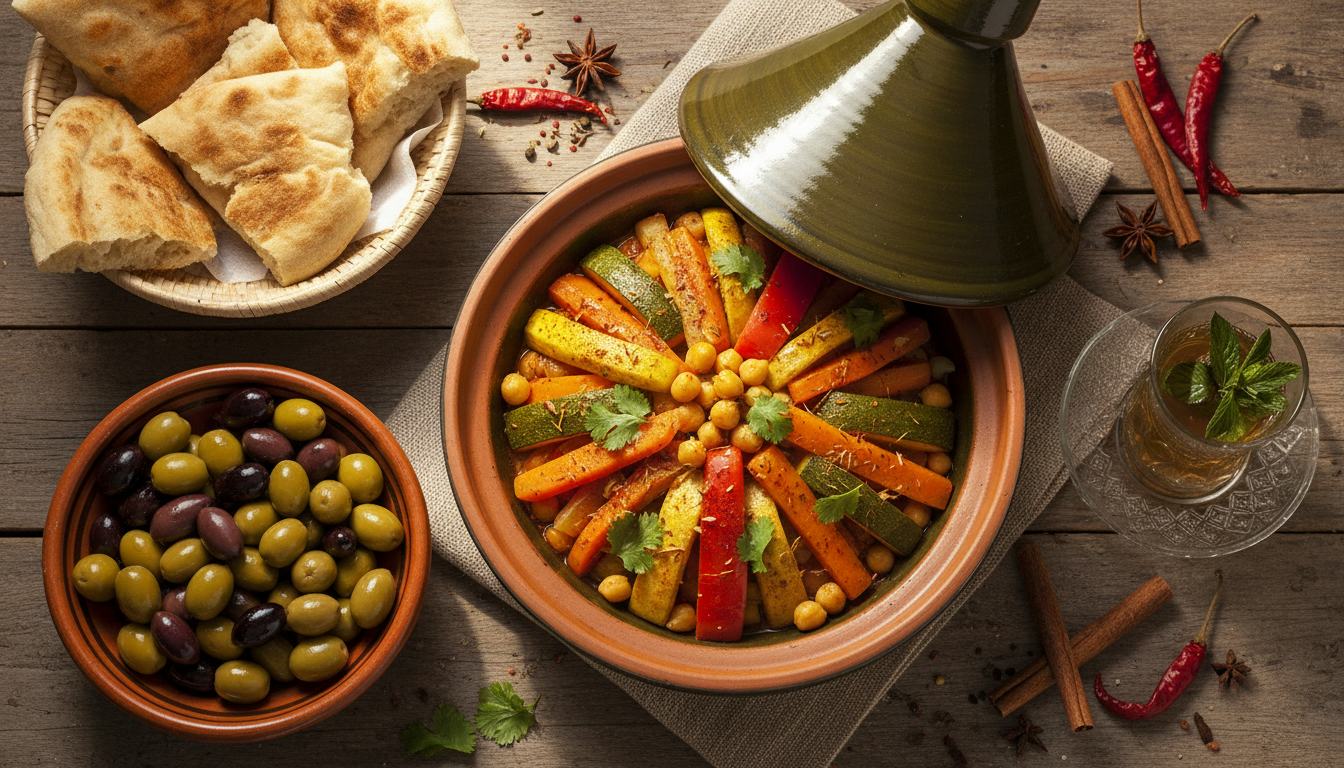
Moroccan food is built around slow-cooked stews, fragrant spices, fresh bread and sweet mint tea, and eating well is easy on almost any budget. This Moroccan food guide covers the dishes to try first, typical prices in dirhams (MAD) and a few simple rules for eating safely.
Prices below are rough 2026 estimates from travel guides and vary by city and venue. Check the Moroccan dirham guide for notes, coins and money tips.
Classic Moroccan dishes to try first
- Tagine: a stew named after the conical clay pot it cooks in, served with bread. Popular versions pair chicken with preserved lemon or lamb with prunes, and vegetable tagines are common. Expect about 50-70 MAD at local spots and 100-150 MAD at tourist restaurants.
- Couscous: traditionally a Friday dish, now served daily in many restaurants with vegetables and meat. Local places charge roughly 60-80 MAD; polished venues 110-170 MAD.
- Harira: a tomato, lentil and chickpea soup, often eaten to break the fast during Ramadan. A bowl at a street-side cafe is about 15-25 MAD.
- Pastilla: a sweet-savoury pie, traditionally made with pigeon or chicken.
- Briouats: crisp pastry parcels filled with meat or cheese.
- Zaalouk: a smoky aubergine and tomato salad, usually served as a starter.
Moroccan street food and snacks
Street food is the cheapest way to eat. A full meal of bread, grilled meat, salad and tea typically costs 30-50 MAD, while fish from coastal stalls runs about 50-90 MAD. Market snacks such as briouats, pastilla slices and msemen usually cost 5-15 MAD each.
- Msemen: square, folded flatbread cooked on a hotplate, eaten with honey, butter or cheese, or stuffed with herbs and kefta.
- Maakouda: golden potato fritters seasoned with garlic, cumin and coriander, eaten alone or in a sandwich.
- Merguez: spicy lamb or beef sausages, often grilled and served in khobz bread.
- Grilled sardines: often stuffed with chermoula, a parsley, cumin and paprika relish, especially good in coastal towns.
- Sfenj: light, fried doughnuts, plain or sprinkled with sugar.
- Chebakia: rose-shaped pastries coated in honey and sesame, a favourite during Ramadan.
Restaurant prices, tipping and eating safely
A main course at a local restaurant is typically 40-80 MAD, mid-range restaurants charge about 90-180 MAD, and a riad or rooftop dinner can reach 250 MAD or more per person. Rounding up or adding 5-10 MAD is normal at casual places; about 10% is fair in mid-range and upscale restaurants.
Choose busy stalls with hot, cooked-to-order food, drink bottled water (about 5-8 MAD for a 1.5-litre bottle) and peel fruit yourself. Most food is halal, and alcohol is generally limited to licensed bars, hotels and some restaurants. After a big meal, a visit to a traditional hammam is a classic way to relax.
Planning a trip around the weather? See our best time to visit Morocco guide, or try the coastal fish stalls on one of these day trips from Casablanca.
Moroccan food FAQ
What is the national dish of Morocco?
Couscous and tagine are the two best-known dishes, and harira is often described as the national soup.
How much does a meal cost in Morocco?
Street food meals cost about 30-50 MAD, local restaurant mains 40-80 MAD and mid-range mains 90-180 MAD.
Is Moroccan street food safe to eat?
Generally yes if you pick busy stalls serving hot, freshly cooked food, and avoid tap water and uncovered seafood or dairy in hot weather.
Sources: Hello Travel, Morocco Food Guide; Intrepid Travel, Morocco’s tastiest street foods.


Leave a Reply