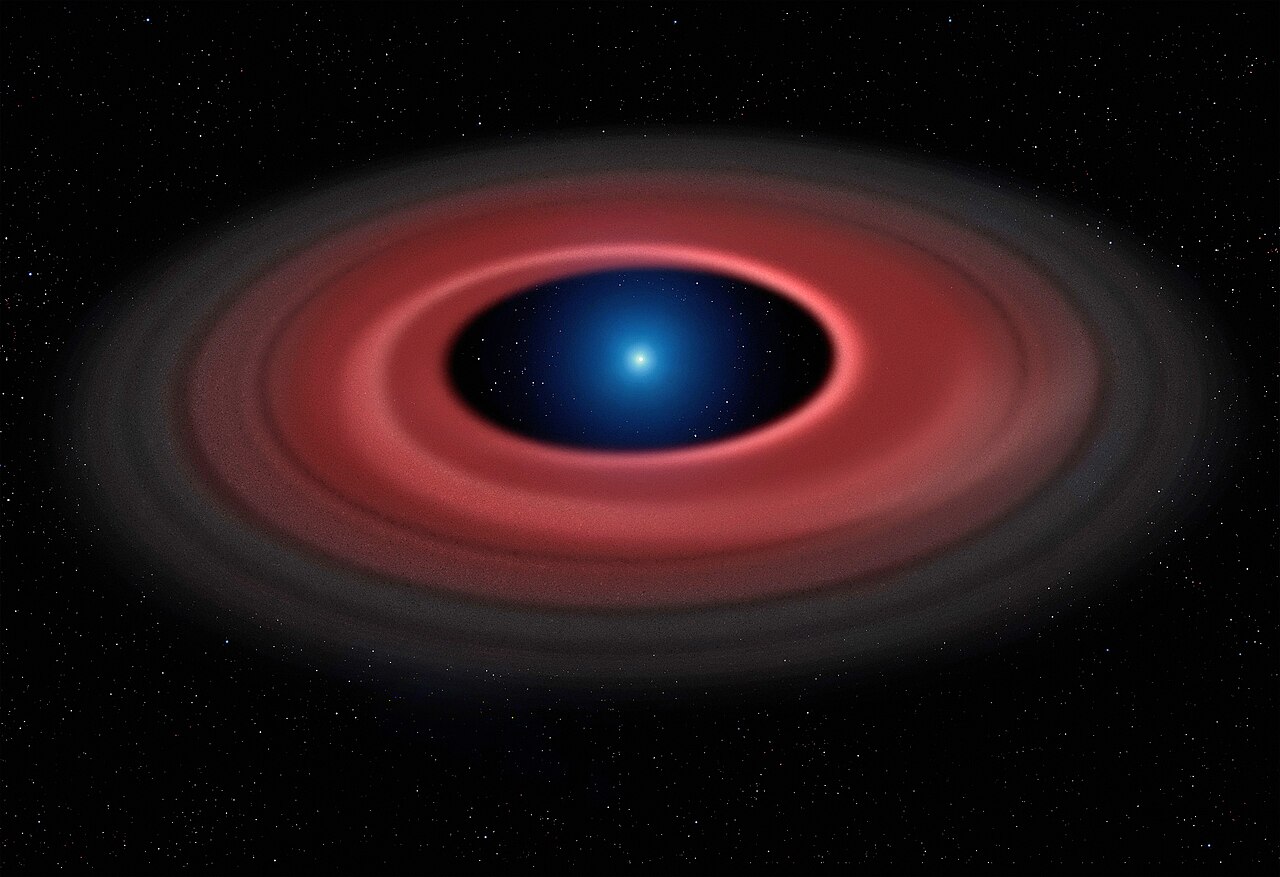
Most white dwarfs look white, blue or faintly yellow. Astronomers at the University of Warwick now say they have found one that looks green, a first for this kind of star.
A star that breaks the colour rules
The object is called WD J1330+6435. A white dwarf is the small, dense remnant left when a Sun-like star runs out of fuel. According to reports based on a Warwick release, the star lies about 280 light-years from Earth in the constellation Draco, and a team led by Dr Mark Hollands, with Boris Gänsicke as co-author, described it in the journal RAS Techniques and Instruments.
Why it looks green
The explanation involves rocky debris. Sodium that fell onto the star’s surface from the remains of its planetary system normally absorbs a narrow band of orange light. Because the white dwarf is so dense, helium atoms collide constantly with the sodium and shift its energy levels. The sodium then absorbs yellow, orange and some red light instead, leaving the star with a chartreuse green glow, as described by Asharq Al-Awsat’s account of the findings.
NASA’s Astronomy Picture of the Day featured the star on October 22, noting that some white dwarfs can appear yellow, green, cyan, pink or purple depending on the trace elements in their atmospheres. The image used by NASA is an illustration rather than a photograph, and the star is too faint to see with the naked eye.
What it tells us
White dwarfs are useful because their atmospheres act as a record of what once orbited them. A green tint is a visible sign that planetary material has been swallowed, giving astronomers a way to study the makeup of distant planetary systems. It follows other space and physics stories we have covered, such as Japan’s MMX mission to Phobos.
Sources: NASA Astronomy Picture of the Day, October 22, 2026; Asharq Al-Awsat; FOX 13.



Leave a Reply