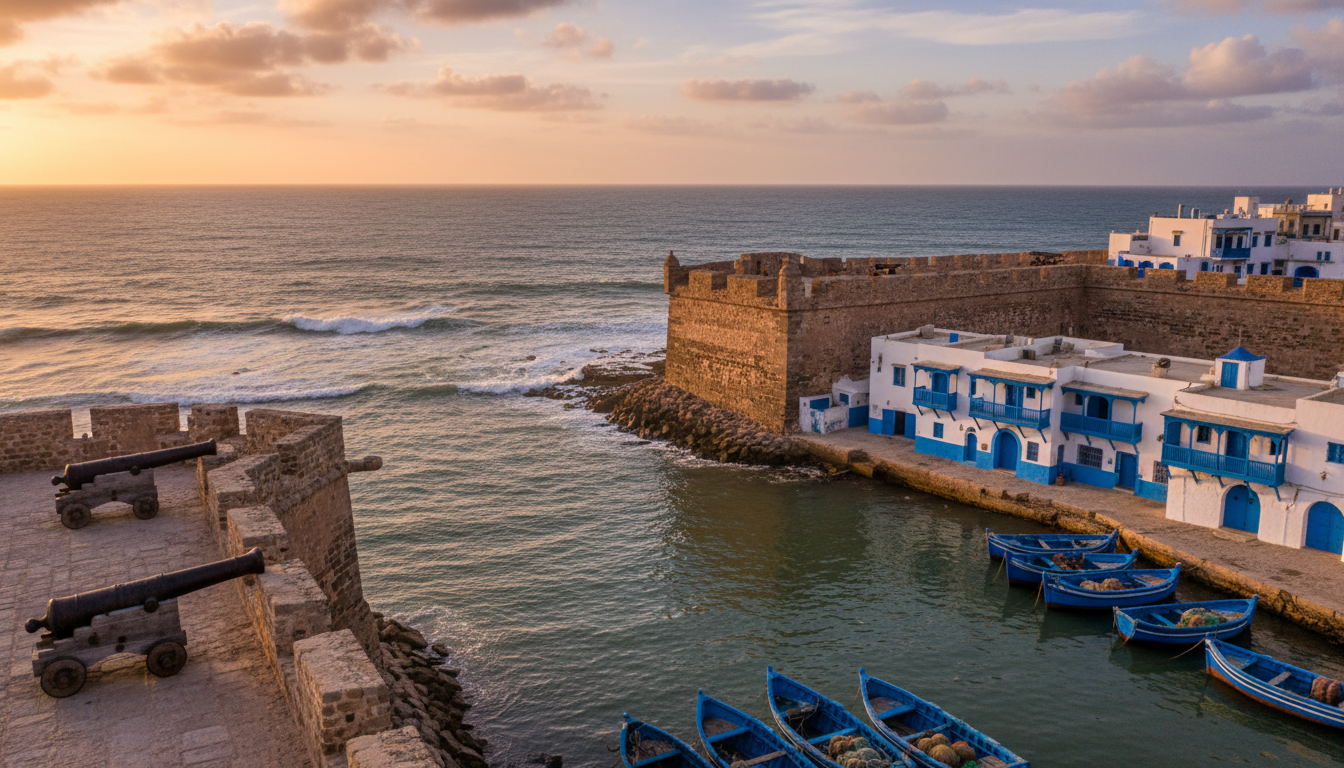
With cannon-lined ramparts, a working fishing harbor and a whitewashed medina, Essaouira is one of the most distinctive towns on Morocco’s Atlantic coast. Known as Mogador until the 20th century, it is home to about 83,000 people, according to the 2024 census figures cited on Wikipedia.
A planned port from the 18th century
People lived on this stretch of coast long before the present town existed, and traces of Phoenician, Carthaginian and Roman presence have been found. The Portuguese built a fortress here in 1506. The city seen today dates from the 1760s, when Sultan Mohammed III had it built, with European architects, including Théodore Cornut, helping to design it for foreign merchants. The site’s own description says the town was conceived as Morocco’s main outlet for goods moving between Saharan Africa and Europe.
That mix of influences is why UNESCO inscribed the Medina of Essaouira on its World Heritage List in 2001 under cultural criteria ii and iv. UNESCO calls it an exceptional example of a late-18th-century fortified town that applies European military design principles in a North African setting.
What to see
- The ramparts: cannons still line the sea walls, which are the town’s most important historical feature.
- The fishing harbor: traditional blue boats sit below the walls, and fishing, including sardines, remains part of the local economy.
- The old quarters: the walled town was organized around the Kasbah, the Medina market area and the Mellah, the former Jewish quarter, where some synagogues and cemeteries have been restored.
- The Mogador islands: offshore, they are part of the World Heritage site and are now a protected bird sanctuary.
Local crafts include argan oil production and thuya wood carving. Our guide to argan oil and the women’s cooperatives explains the first of these.
Music, wind and getting there
Essaouira hosts the Gnaoua festival, held since 1998, usually in the last week of June. It centers on gnaoua music and also includes rock, jazz and reggae, and Wikipedia reports crowds of around 450,000 a year. Strong trade winds are a feature of the coast, although the bay is partly sheltered by Mogador island.
Access is about to get easier for some travelers: Royal Air Maroc will launch direct Casablanca-Essaouira flights on November 1.
Once Morocco’s leading commercial port, Essaouira declined for decades before tourists rediscovered it in the 1960s. Today its blend of history, sea air and music makes it a favorite short break from Marrakech and the coast.
Sources: Wikipedia, Essaouira; World Heritage Sites, Medina of Essaouira; UNESCO World Heritage Centre


Leave a Reply