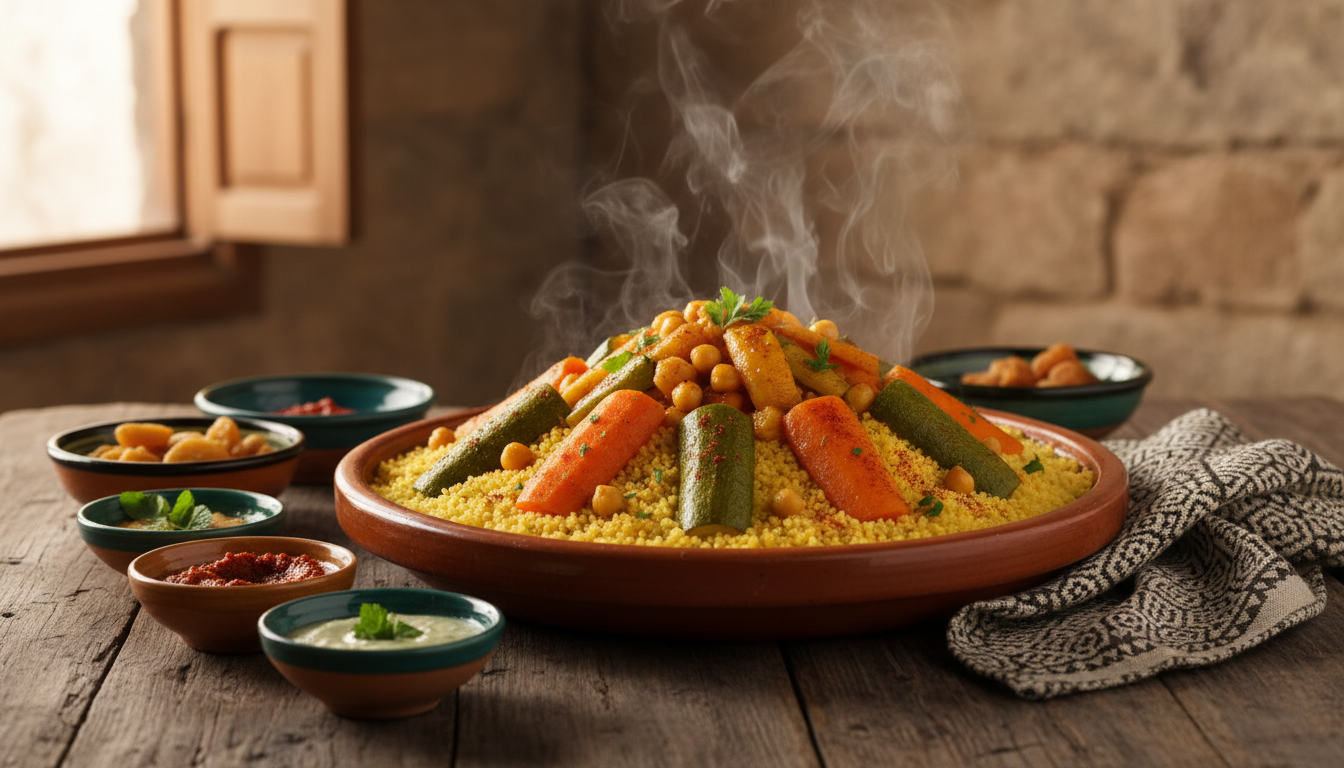
Few dishes are as closely tied to North African tables as couscous. In December 2020, UNESCO added the knowledge, know-how and practices around its production and consumption to its list of intangible cultural heritage, in a joint nomination by Algeria, Mauritania, Morocco and Tunisia.
From grain to semolina to pellets
Couscous is traditionally made from wheat or barley, and sometimes maize, millet or sorghum, according to Africanews. The grain is ground into semolina, which is then rolled by hand into small pellets, sieved, and steamed. UNESCO describes the preparation as a ceremonial process made up of several operations, and notes that it relies on dedicated tools and utensils: clay pieces made by potters and wooden ones from artisanal workshops.
Knowledge of the craft is passed on mainly informally, by watching and imitating, according to UNESCO. Women play a central role in preparing the dish and in handing down the songs, gestures and rituals that go with it, Africanews reports.
What goes with it
The accompaniments change with region, season and occasion. Typical partners include:
- meat or fish;
- spicy stews;
- chickpeas and seasonal vegetables.
In the nomination, the four countries describe couscous as present at every social or cultural event, “at once ordinary and special.” UNESCO links it to solidarity, conviviality and sharing a meal.
Couscous in Moroccan food culture
In Morocco, couscous sits alongside the clay-pot stew we covered in our tagine explainer and the other dishes in our guide to eight Moroccan dishes to try. A Moroccan restaurant owner quoted by Africanews at the time of the listing put it simply: Moroccans are crazy about couscous, and even children love it.
For visitors, the listing is a reminder that the dish is more than a menu item: it is a shared practice built on hands, patience and gathering around a single large plate.



Leave a Reply