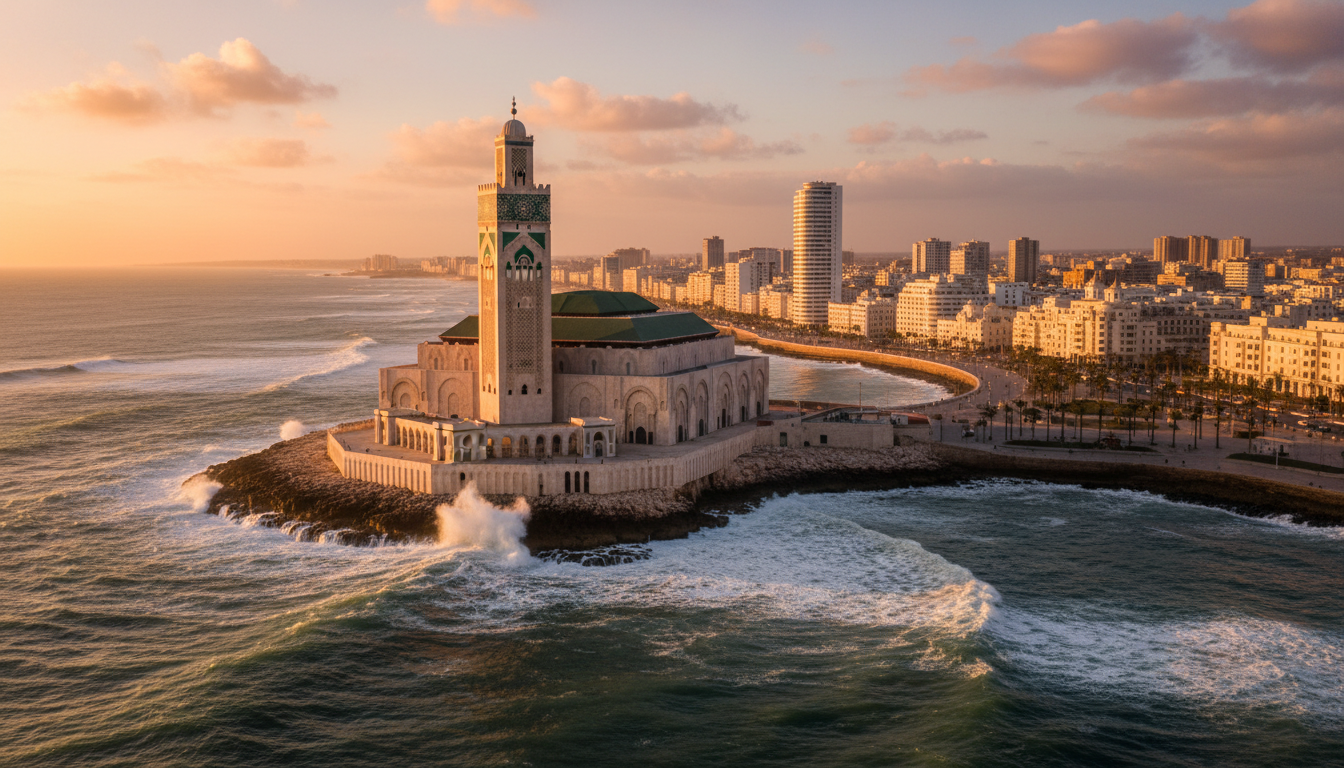
Casablanca is Morocco’s largest city and economic hub, and one day is enough to see its biggest highlights: the Hassan II Mosque, the Old Medina, the Habous Quarter and the Atlantic Corniche. This guide gives a simple route, visiting details and practical tips.
Unlike Marrakech or Rabat, Casablanca is a modern, working city, so the best way to enjoy it is to focus on a handful of places rather than try to see everything.
Key facts
- Top sight: Hassan II Mosque, with a 200-metre minaret, opened to the public in 1993.
- Best time to visit: May to October; November is typically rainy and windy.
- Time needed: one full day, starting with a morning mosque tour.
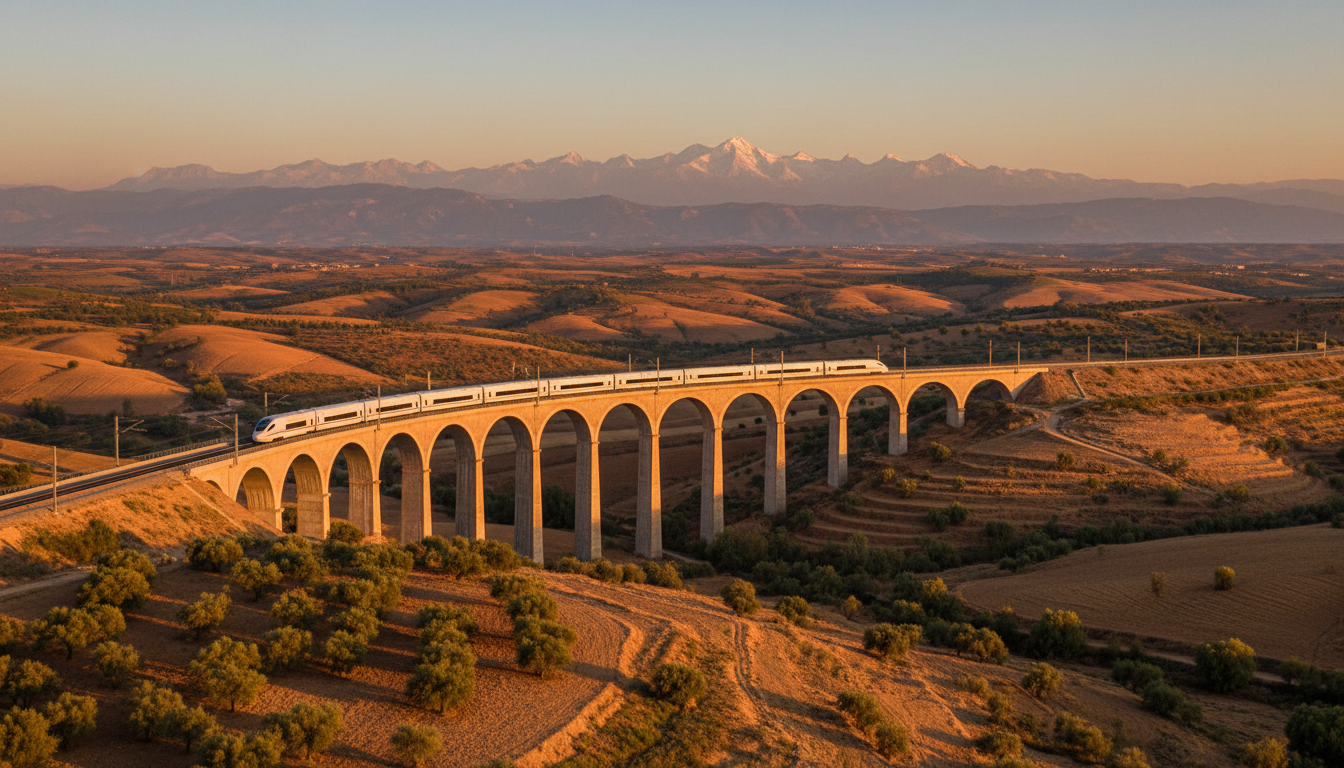
- To Rabat: about one hour on the high-speed Al Boraq train.
Morning: Hassan II Mosque
Start at the Hassan II Mosque on the Atlantic shoreline. It took seven years to build, from 1986, and its minaret reaches 200 metres. The complex can hold about 105,000 worshippers, roughly 25,000 in the prayer hall and 80,000 on the outdoor esplanade.
Non-Muslim visitors can enter only on a guided tour. Between 16 September and 14 March, tours run Saturday to Thursday at 9:00, 10:00, 11:00, 12:00 and 15:00, and on Friday at 9:00, 10:00 and 15:00. From 15 March to 15 September an extra 16:00 tour is added. Hours change during Ramadan, so check the official schedule before you go.
A tour costs 130 dirhams (about 12 euros) for adult foreign visitors, according to a Barceló travel guide; prices can change. Dress modestly, with shoulders and legs covered, and keep quiet inside.
Midday: Old Medina and Central Market
Head to the walled Old Medina, the city’s historic centre. Unlike the medinas of Fes and Marrakech, it caters mainly to everyday local shopping rather than souvenirs, which makes it a relaxed place to wander whitewashed alleys and taste Arabic coffee.
Nearby, the Central Market has an open-air seafood souk, a good option for a simple fish lunch.
Afternoon: Habous Quarter and Art Deco
Built by the French in the 1920s, the Habous Quarter (the New Medina) blends Moorish-style architecture with wide streets. Its shops sell spices, lamps, carpets and ceramics, and Patisserie Bennis, open since 1930, is a well-known stop for pastries.
If you have time, walk through the city centre to see Art Deco landmarks such as the 1929 Cinema Rialto and the buildings around Place des Nations Unies, and pass Mohammed V Square, which is especially atmospheric when lit up in the evening.
Evening: Corniche and Rick’s Café
End the day on the Corniche in the Ain Diab district, a seafront boardwalk of cafés, restaurants and hotels, with strong sunsets near the El Hank lighthouse. Ain Diab Beach lies at its end.
For dinner, Rick’s Café recreates the bar from the 1942 film Casablanca, with live jazz and a piano. It was opened about two decades ago by former US diplomat Kathy Kriger, and booking well ahead is advised. The film itself was shot in California, not in Morocco.
Day trips from Casablanca
With an extra day, Rabat is about an hour away by Al Boraq, El Jadida is roughly 1 hour 20 minutes by road and Bouznika about 40 minutes. Travellers keen on the north can also read our Chefchaouen day trip guide.
FAQ
Can non-Muslims visit the Hassan II Mosque?
Yes, but only on a guided tour at set times, with modest clothing.
Is one day enough in Casablanca?
Yes, for the main sights. Start with a morning mosque tour, then follow the route above.
When is the best time to visit Casablanca?
May to October, according to travel guides; November is typically rainy and windy.
Sources: Barceló Travel Guide, Hassan II Mosque; Revigorate, Things to Do in Casablanca. Prices and hours may change; check before travelling.

Leave a Reply