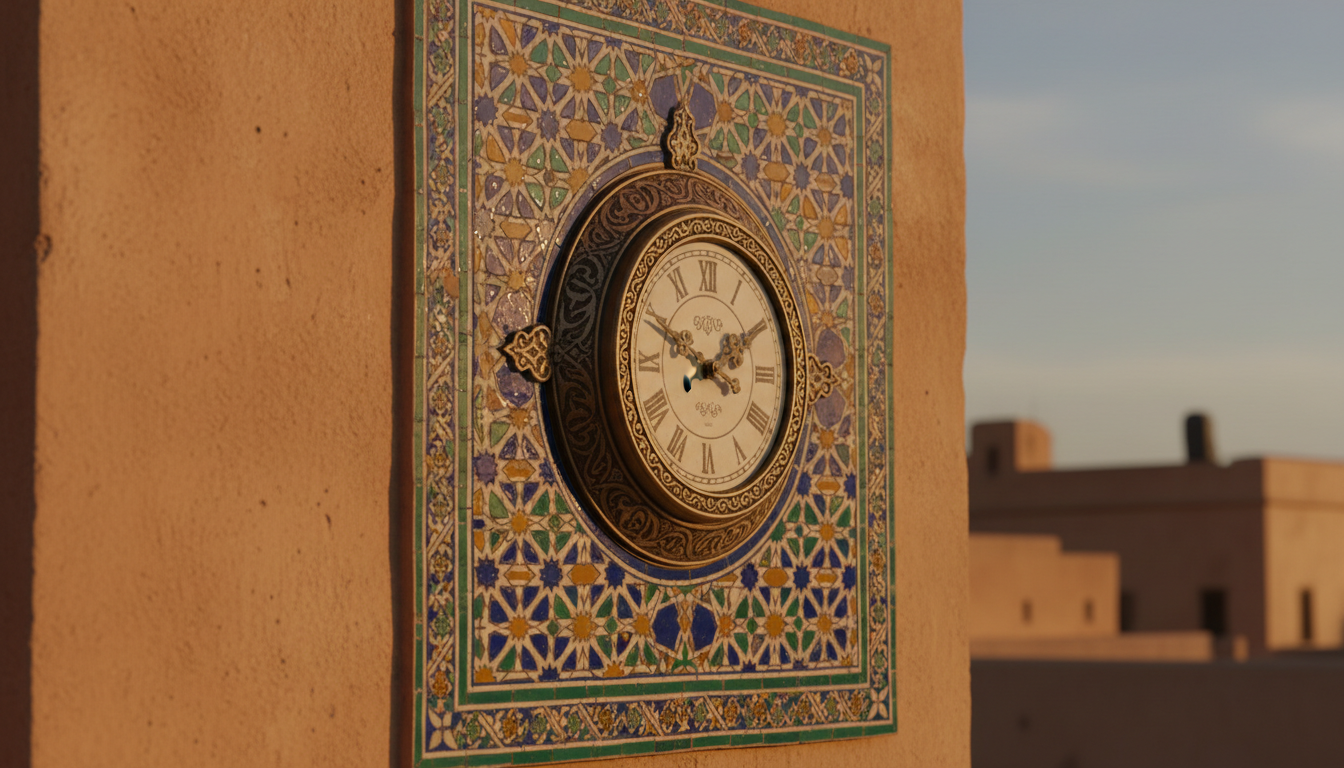
Morocco and its European neighbours are changing clocks on different calendars this autumn. Morocco moved back to Greenwich Mean Time (GMT) on September 20, and most of Europe follows with its own seasonal clock change on the last Sunday of October, which falls on October 25 this year.
How Morocco got back to GMT
The Government Council approved decree n° 2.26.530 on legal time on June 25, 2026, and it was published in the Bulletin officiel n° 7521 on June 29, according to Hespress and FNH. The text repeals the 2018 decree that had added a permanent 60 minutes to Morocco’s legal time, with only a temporary return to GMT during Ramadan.
The Presidency of the Government confirmed on September 18 that clocks would go back by 60 minutes overnight on September 19-20, as TelQuel reported. Hespress noted that parents, teachers and unions had long criticised the earlier regime for its effect on school mornings in winter, while supporters had pointed to alignment with European trading partners and energy savings.
What changes with Europe tonight
Under the European Union’s summer-time rules, clocks go back one hour at the end of October. Spain and France, which use Central European Time, therefore return to GMT+1 for the winter. With Morocco now on GMT, the gap with both countries is one hour, with Madrid and Paris ahead of Rabat. Under Morocco’s previous permanent GMT+1, the two sides shared the same time in winter.
- Morocco: GMT all year under the new decree.
- Spain and France from tonight: GMT+1 until the clocks move forward again next spring.
- Travellers, businesses and ferry or flight bookings across the Strait should check local times on tickets and calendar invitations.
The practical effect is small for most people, but anyone scheduling calls or travel between Morocco and Europe should note that the usual one-hour winter alignment no longer applies.
Sources: Hespress (FR); TelQuel (FR); FNH (FR)



Leave a Reply