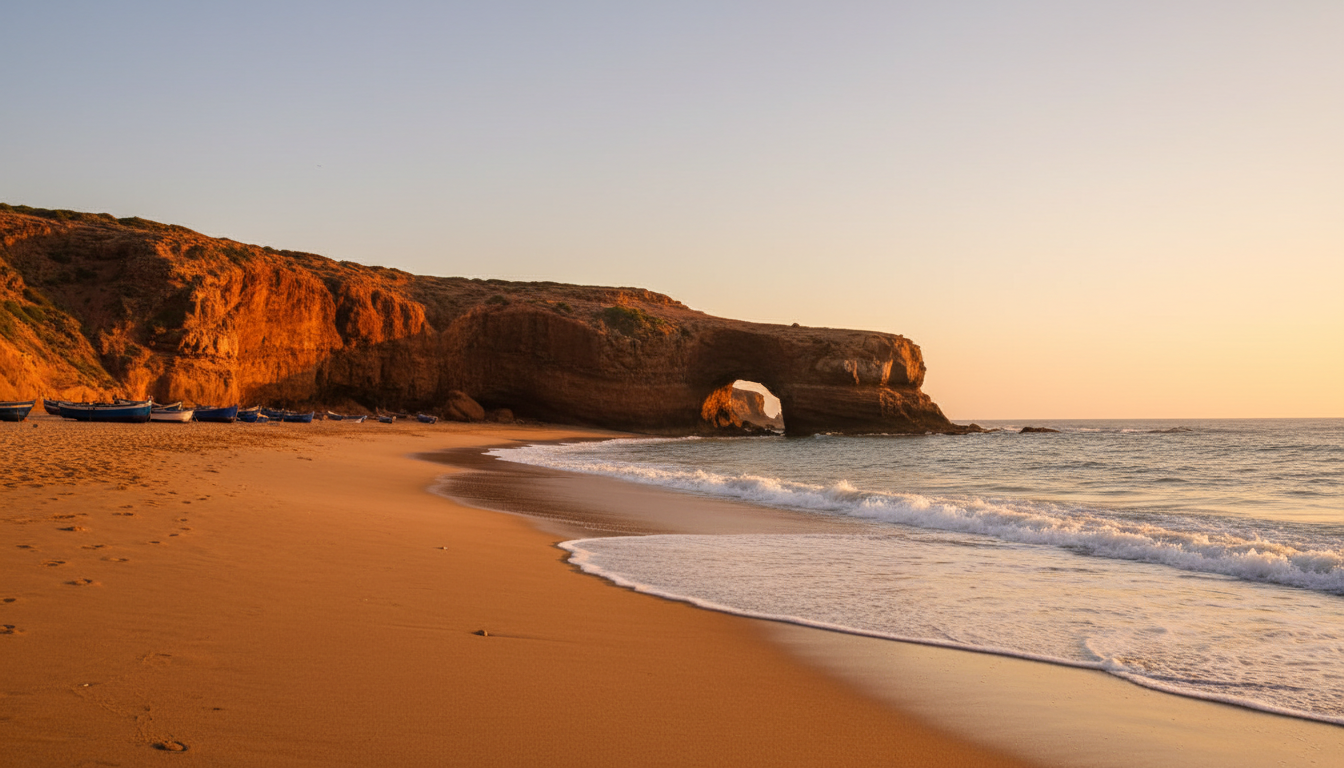
The best beaches in Morocco stretch along two coasts: the wild Atlantic, from Tangier down to Sidi Ifni, and the calmer Mediterranean in the north. Whether you want surf, wind sports, family swimming or sandstone cliffs at sunset, there is a beach for each plan, and autumn and spring are often the most comfortable seasons to go.
Key facts at a glance
- Best for surf: Taghazout and Imsouane, October to April.
- Best for wind sports: Essaouira and Sidi Kaouki, April to September.
- Best for swimming: Agadir and the Mediterranean beaches near Tetouan, in summer.
- Best for scenery: Legzira, near Sidi Ifni, with its sea-carved cliffs.
Atlantic coast beaches for surf and wind
Taghazout, about 20 km north of Agadir, is a former fishing village that became Morocco’s best-known surf hangout. Its right-hand point breaks suit different levels, and conditions are generally best from October to April; beginners usually do better in October, November and March. A grand taxi from Agadir is the easiest way to get there.
Imsouane, between Agadir and Essaouira, is known for “The Bay”, often described as Morocco’s longest wave, a mellow right-hander that suits longboarders and beginners. Water temperatures are around 16-17°C in winter, so bring a wetsuit all year.
Essaouira has several miles of sand just south of the medina, reached through Bab Marrakech. Steady winds earned the city the nickname “Wind City of Africa”, which makes it a favourite for windsurfing and kitesurfing from April to September, but less ideal for quiet sunbathing. Our one-day Essaouira itinerary shows how to combine the beach with the old town. About 20 km further south, Sidi Kaouki is quieter, with reliable winds and kitesurfing schools.
Agadir is the classic resort beach: a roughly 9 km stretch of golden sand, cleaned every morning, with a promenade, restaurants and water sports. The Atlantic undertow can be strong, so swim where lifeguards are on duty and follow the flag system. For a full plan, see our one-day Agadir guide.
Southern cliffs and Mediterranean beaches
Legzira, near Sidi Ifni, is famous for red sandstone cliffs and arches carved by the sea; one of the two arches collapsed in 2016. It is about 4 km long and relatively uncrowded. Check tide times before walking along the shore, because high tide can block the path. Spring (April-May) and autumn (September-October) bring temperatures of roughly 20-25°C.
Oualidia, north of Essaouira, is a calm, shallow tidal lagoon suited to swimming, paddleboarding, kayaking and birdwatching. It is very busy in summer, so book ahead if you plan to stay in July or August.
On the Mediterranean side, Cabo Negro near Tetouan offers a crescent bay backed by pine forest, with sea temperatures of about 23-25°C from June to September. Further east, Dalia Beach, around 20 km from Tangier, is calmer and warmer than Atlantic beaches and is a good option for less confident swimmers.
Practical tips for visiting Moroccan beaches
- Choose May or September-October for fewer crowds and pleasant weather on the Atlantic coast.
- Use grand taxis for villages with limited bus service, such as Taghazout, Imsouane and Sidi Kaouki.
- Atlantic water is cooler and rougher than the Mediterranean; always check flags and local advice.
- Dress modestly away from resort areas and carry water and sun protection.
FAQ: beaches in Morocco
What is the best beach in Morocco for swimming?
Agadir offers a patrolled, well-kept beach in the warmest months, while the Mediterranean coast near Tetouan has calmer water.
Where can beginners learn to surf in Morocco?
Taghazout and Imsouane are popular, with surf schools and gentler waves; October, November and March suit beginners at Taghazout.
When is the best time to visit Morocco’s beaches?
Spring and autumn are comfortable on the Atlantic coast, while June to September is best for the Mediterranean.
Sources: Rough Guides; The Mediterranean Traveller. Featured image: AI-generated illustration.

Leave a Reply